
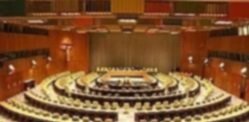
Trusteeship Council
Addressing Unrecognized States
The United Nations Trusteeship Council was born from the conviction that the international community bore a collective responsibility toward peoples not yet exercising full self-governance, a mandate that guided the decolonization of trust territories throughout the latter half of the twentieth century. Having formally suspended operations in 1994 with the independence of Palau, the Council stands today as a dormant but constitutionally intact body, its potential unrealized in a world that has not, in fact, resolved its questions of sovereignty and self-determination. Dozens of polities across the globe, among them Kosovo, Taiwan, Western Sahara, Somaliland, and Abkhazia, exist in a twilight of contested or absent recognition, their populations denied the full protections, privileges, and participation that formal statehood confers within the international system. The Montevideo Convention of 1933 established the foundational criteria for statehood often still considered a standard in global politics. A permanent population, a defined territory, an effective government, and the capacity to enter into relations with other states, yet the gap between meeting these criteria and achieving meaningful recognition is still unclear.
This reimagined Trusteeship Council is convened on a transformative premise: that the United Nations requires a dedicated, principled venue through which unrecognized and partially recognized entities may formally petition the international community, present evidence of their governance, territorial integrity, and popular mandate, and engage in structured dialogue toward a pathway of recognition. This body does not presume to adjudicate sovereignty unilaterally, nor to supersede the Security Council in matters of international peace and security. Rather, it aspires to fill a conspicuous and consequential gap in the architecture of international law, offering a forum where claims to statehood can be heard with rigor, dignity, and impartiality, insulated from the veto politics that too often reduce questions of human self-determination to instruments of great power competition.
Delegates must grapple with questions that strike at the very foundations of the international order. What obligations does the community of nations bear toward peoples whose political existence goes unacknowledged? How should the principles of territorial integrity and self-determination be reconciled when they conflict, as they so frequently do? And can this Council, reborn for the twenty-first century, serve not as an arbiter of winners and losers, but as a bridge between the world as it is legally mapped and the world as it is humanly lived? The work ahead demands both legal precision and moral seriousness. The peoples whose futures hang in the balance deserve nothing less.