
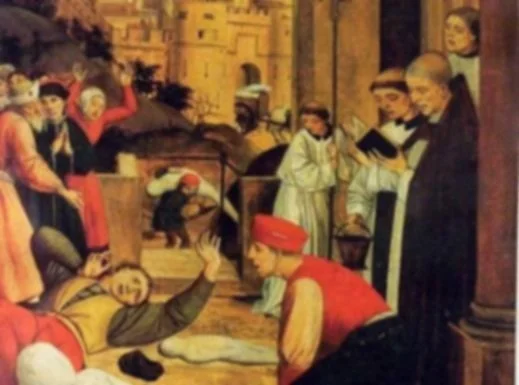
Plague of Justinian
The Eastern Roman Empire stands at a critical crossroads. In 539 CE, Emperor Justinian I’s ambitious campaign to restore Roman control over the former Western Empire appears close to victory, but years of warfare, political instability, environmental catastrophe, and religious division have left the empire increasingly vulnerable. The imperial court at Constantinople is filled with generals, governors, religious leaders, foreign allies, and political rivals, all competing for influence and increasingly scarce resources.
The empire’s difficulties extend far beyond the battlefield. The Volcanic Winter of 536 has devastated agricultural production, contributing to famine and food shortages throughout the empire. At the same time, Slavic migrations threaten the Danube frontier, rebellions and Berber raids endanger vital grain shipments from Africa, and tensions with the Sassanian Empire threaten to reignite a costly war in the East. Despite these pressures, Justinian’s reconquests continue, with Belisarius besieging Ravenna and Roman victory in Italy appearing imminent. Compounding these problems is the empire’s extraordinary religious and ethnic diversity. Chalcedonians, Monophysites, Arians, Nestorians, Manicheans, and remaining pagans hold influence across different parts of the Roman world, while Greeks, Romans, Egyptians, Armenians, Syrians, Goths, and other peoples possess competing loyalties. The imperial government must determine how to maintain unity without further provoking groups already suspicious of Constantinople. At the same time, court politics are shaped not only by official positions but by familial connections, personal loyalties, and rival factions.
The committee will challenge delegates to confront questions with no simple solution: How can an already financially exhausted empire respond to a devastating epidemic? Should military campaigns continue or be abandoned? How can food supplies, trade, and public order be maintained? Can political and religious divisions be contained during an existential crisis? And, perhaps most importantly, what happens if the emperor himself falls victim to the plague? Delegates will have to balance the survival of the Roman Empire with their own character’s interests while navigating court intrigue, military conflict, factional politics, and an increasingly unpredictable crisis.